Last week, I published a post about RICAP 11, the package of 50+ zoning code amendments heading to the Portland City Council. The response was clear: many were not even aware of this, and people want to understand what's in it.
So here it is. I've reviewed the available details and want to walk through the items I think Portland homeowners, especially those of us in established residential neighborhoods, should be paying attention to. This is my distillation of this information. I'm not here to tell you how to feel about any of this, nor will I pretend to be a subject matter expert on zoning. Some of these changes may strike you as common sense. Others might concern you. What matters is that you know they're on the table because the Housing and Permitting Committee Meeting is tomorrow, June 2, and written testimony is now open. The full City Council hearing is June 24.
There's a lot to cover, so I'm breaking this into two posts. This one focuses on the changes that most directly affect what happens on and next to your lot. I'll post the second part soon.
Quick Reminder: What Is RICAP?
RICAP stands for Regulatory Improvement Code Amendment Package. Portland's zoning code was adopted in 1990, and these packages are how the City makes periodic updates. RICAP 10 was adopted in June 2024 and took effect that October. RICAP 11 is the latest round.
The City frames these as "minor technical fixes" and "minor policy changes" designed to remove barriers to development and streamline permitting. There are 19 minor policy items and 35 technical items across three categories: parking and loading, exterior areas, and general regulatory improvement.
Parking in Residential Setbacks
There are ten parking and loading amendments in the package. The one that matters most for residential neighborhoods is the change allowing parking within residential setbacks in certain situations.
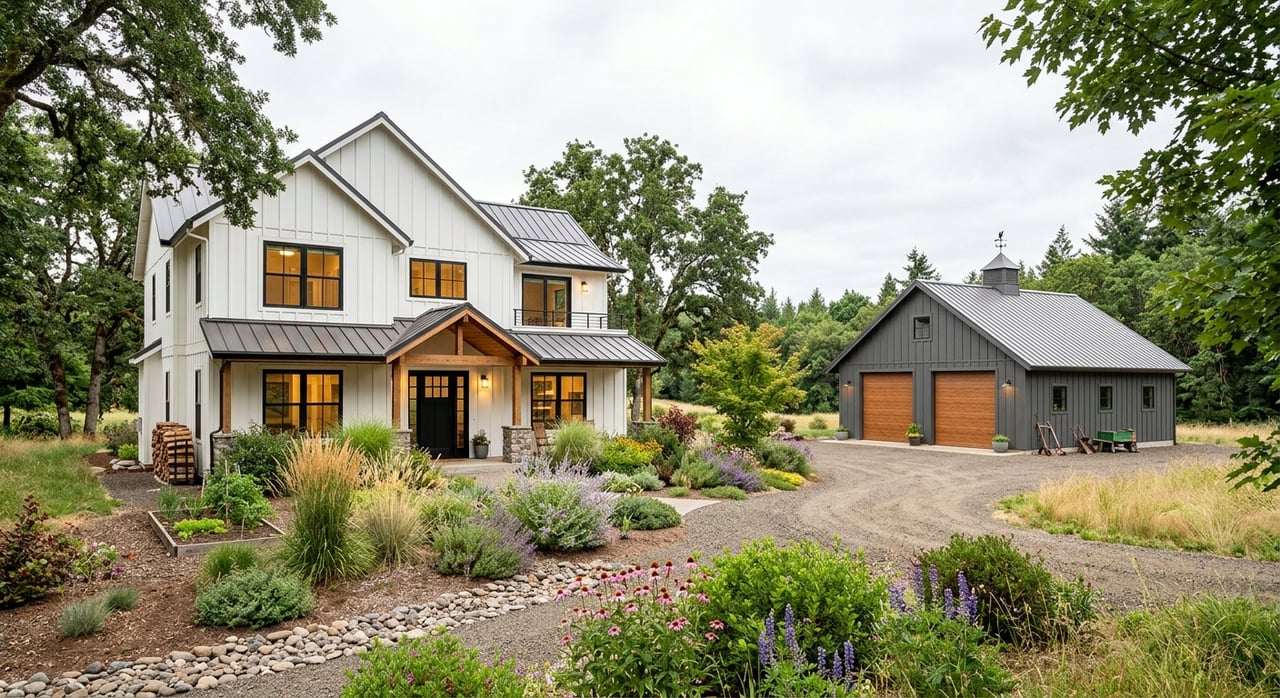
Right now, parking spaces are not allowed within the first 10 feet of a front lot line in residential zones, and on corner lots, parking isn't allowed within the side-street setback. These setback rules are one of the guardrails that limit how aggressively a residential lot can be developed. They keep driveways, parking pads, and vehicle areas from consuming the entire front and side of a property.
RICAP 11 proposes to allow parking in setbacks in some cases. The specific conditions aren't fully detailed in the public-facing summaries (this is one reason the full Recommended Draft is worth reading), but the direction is clear: more flexibility for developers and property owners to use setback space for vehicles.
In neighborhoods with R5 zoning, such as Woodstock, Foster-Powell, and Creston-Kenilworth, lots are already being subdivided and developed into duplexes, triplexes, and fourplexes under the Residential Infill Project. Every square foot of flexibility in how those lots can be configured affects what gets built, how much of the lot it covers, and what it feels like to live next door.
This section also includes updates to the conditions that trigger bike parking upgrades, which are relevant for anyone developing or significantly remodeling a property.
Mechanical Equipment Screening: Removed
This one got significant attention during the Planning Commission process, and it's worth understanding in detail.
The original staff proposal required screening of detached mechanical equipment (heat pumps, HVAC units, generators) located within residential setbacks. The proposed screening would have been required from both adjoining lots and the street. After testimony that screening adds cost and can interfere with equipment efficiency, the Planning Commission removed all screening requirements for detached mechanical equipment in setbacks in single-dwelling zones.
What this means in practice: a new duplex or fourplex built next to your home can place its heat pump compressors in the setback, as close to your property line as the code allows, with no screening between the equipment and your yard or bedroom window.
During the Planning Commission's deliberations, a commissioner raised concerns that noise complaints related to HVAC equipment are increasing as density rises across the city. The City's own data showed 288 noise complaints filed in 2025, with 9 of those (about 3%) citing HVAC or generator noise in single-dwelling residential zones. That number is small in isolation, but the concern is about trajectory: as more units get built on more lots, more mechanical equipment ends up in more setbacks, and there's now no screening requirement to buffer the impact.
Why These Two Items Matter Together
Parking flexibility and screening removal might seem like separate issues, but they're connected. Both are about what can happen in the margins of a residential lot, the setback space between a building and the property line. That space is the buffer between your home and your neighbor's development. When the rules governing that space get loosened, the experience of living next to new construction changes.
This isn't an argument for or against the changes. It's an observation that these are the kinds of details that don't make headlines but shape what a neighborhood actually feels like to live in.
What You Can Do Right Now
Read the full Recommendation Document here
Register for oral testimony here
Mark June 24. That's when the full City Council holds its hearing. If adopted, the code changes take effect in August 2026.
Part 3 coming soon: outdoor shelter caps, landscaping changes, and what happened when people actually showed up to testify.
Gennyfer Santel
Santel Home Team | Better Homes and Gardens Realty Partners
Your Woodstock Neighbor